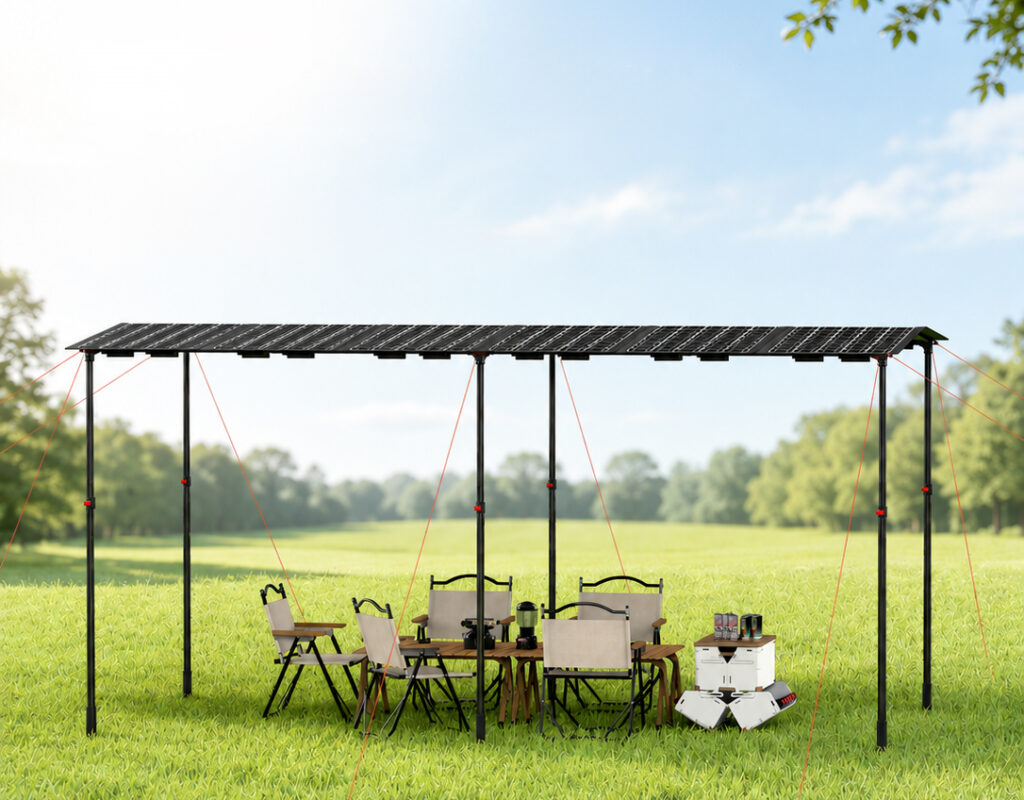

If you own a business, manage a commercial property, or oversee a school, hospital, or municipal parking lot, 2026 may be the most important year yet to consider a Solar Canopy. Sweeping changes to federal tax law have compressed the timeline for claiming the Investment Tax Credit (ITC), reshuffled eligibility rules, and introduced new domestic content and foreign sourcing requirements that directly affect how much money you can save. This guide breaks down everything property owners across the United States and Canada need to know about Solar Canopy rebates, the current ITC framework, and how to lock in the best possible incentive package before the rules tighten further.
- Why a Solar Canopy Makes Sense for North American Properties in 2026
- Solar Canopy Rebates in 2026: Federal, State, and Utility Programs
- How the ITC Applies to Solar Canopy Projects in 2026
- Solar Canopy Cost Breakdown and ROI in North America
- Domestic Content and FEOC Rules for Solar Canopy Projects
- State-by-State Solar Canopy Incentives Across the U.S. and Canada
- Solar Canopy Financing Options: Direct Pay, Transferability, and PPAs
- How to Qualify: Step-by-Step Solar Canopy Project Checklist
- Common Mistakes to Avoid When Claiming Solar Canopy Rebates
- The Future of Solar Canopy Incentives Beyond 2027
- Frequently Asked Questions About Solar Canopy Rebates and the ITC
- Final Thoughts: Is a Solar Canopy Still Worth It in 2026?
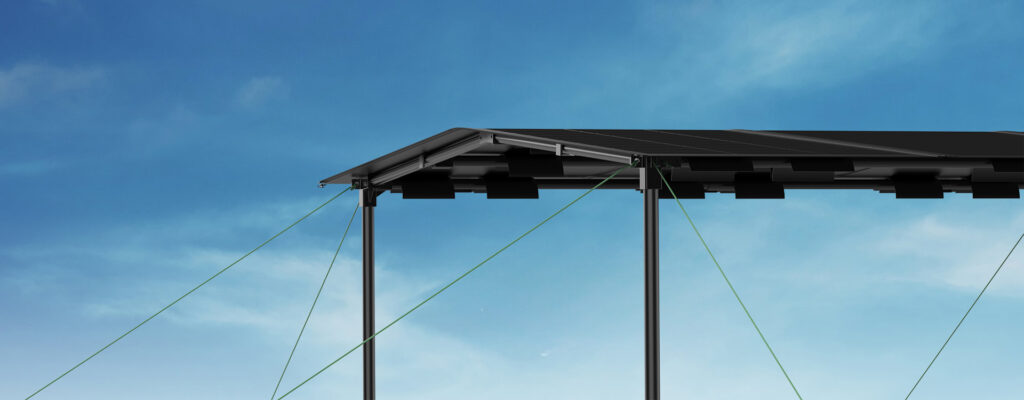
Why a Solar Canopy Makes Sense for North American Properties in 2026
A Solar Canopy is a structure that uses elevated racking to hold photovoltaic panels above an existing parking lot, walkway, or open outdoor space. Rather than competing with rooftop real estate or requiring additional land, it converts an already-paved surface into a dual-purpose asset: shaded parking for vehicles, employees, and customers, plus a source of clean, on-site electricity generation. Because these structures sit above ground level, installers can angle the panels for optimal sun exposure regardless of a building’s roof pitch, shading conditions, or structural limitations.
Commercial and institutional property owners have been especially drawn to this technology because it solves two problems simultaneously. First, it generates meaningful amounts of electricity that can offset high daytime utility rates and demand charges. Second, it adds functional value to an otherwise underutilized parking area — shade in summer, protection from hail and snow, and a natural platform for electric vehicle (EV) charging infrastructure. For retail centers, corporate campuses, hospitals, universities, warehouses, and municipal buildings, this combination has turned parking lots into some of the most attractive sites for new solar development in North America.
The Growing Appeal of Elevated Solar Structures
Unlike ground-mounted arrays, an elevated canopy requires no additional acreage, which matters enormously for urban and suburban properties where land is expensive or simply unavailable. Studies estimate that parking lots account for a significant share of total surface area in many North American cities, representing an enormous untapped opportunity for distributed solar generation. Add to that the growing demand for on-site EV charging, and it becomes clear why more property owners are exploring this option heading into 2026.
Solar Canopy vs. Rooftop and Ground-Mount Systems
Compared to rooftop solar, a canopy structure typically costs more per watt because it requires a custom steel or aluminum frame and a reinforced foundation rather than relying on an existing roof. However, it avoids many of the complications that come with rooftop installations, such as aging roof membranes, structural load limits, and shading from HVAC equipment or adjacent buildings. Compared to ground-mounted systems, a canopy preserves the underlying land for its original purpose — parking — while still capturing the same solar generation potential. For many commercial property owners, this trade-off between higher construction cost and greater land efficiency is what makes a covered parking structure the right long-term investment.
Solar Canopy Rebates in 2026: Federal, State, and Utility Programs
Understanding the full incentive stack available for a Solar Canopy project starts with recognizing that there are three distinct layers of support: federal tax credits, state-level rebates and performance incentives, and utility-specific programs. Each layer works independently, and in many cases they can be combined (or “stacked”) to significantly reduce the net cost of a project.
At the federal level, the cornerstone incentive remains the Investment Tax Credit, which allows qualifying commercial projects to deduct a percentage of total installed cost from federal tax liability. Layered on top of the ITC is the Modified Accelerated Cost Recovery System (MACRS), a depreciation schedule that lets businesses recover a large portion of their investment through tax deductions, often within the first year thanks to permanently reinstated 100% bonus depreciation for qualifying commercial energy systems. Together, these two federal mechanisms can return roughly 45% to 55% of a project’s gross cost through tax benefits alone, depending on the business’s tax position and project structure.
Federal Rebate Layers That Apply to a Solar Canopy
Beyond the base 30% credit, several bonus adders can increase the total incentive value for an eligible canopy project:
- Domestic Content Bonus — an additional 10 percentage points for projects that meet U.S. manufacturing thresholds for steel, iron, and manufactured components.
- Energy Community Bonus — an additional 10 percentage points for projects located in designated energy communities, such as former brownfield sites or areas with a legacy of fossil fuel employment.
- Low-Income Communities Bonus — a competitive credit that can add 10 to 20 percentage points for projects located in or benefiting low-income census tracts, subject to an annual capacity allocation.
When these adders are combined, a well-structured project can realistically reach 40% to 50% or more of total project cost recovered through federal credits alone.
State and Utility-Level Solar Canopy Incentive Programs
State and utility programs vary considerably and are where much of the remaining savings potential lies. Some states offer direct cash rebates per watt installed, while others provide performance-based incentives that pay a set rate per kilowatt-hour generated. A number of states also offer property tax exemptions for the added value a solar structure brings to a parking lot, as well as sales tax exemptions on the equipment itself. Massachusetts, for example, has historically offered a dedicated per-kilowatt-hour “canopy adder” through its SMART program for projects that meet the state’s official definition of a covered parking structure. Other states, including Rhode Island, California, New York, and Illinois, maintain their own mix of rebates, Solar Renewable Energy Credit (SREC) markets, and net metering rules that can materially change the economics of a canopy installation.
Because these programs shift frequently and are often capped or allocated on a first-come, first-served basis, property owners should check the Database of State Incentives for Renewables and Efficiency (DSIRE) and consult with a local installer familiar with current program status before finalizing a budget.
How the ITC Applies to Solar Canopy Projects in 2026
The single most important development for anyone planning a Solar Canopy in 2026 is the accelerated timeline introduced by the One Big Beautiful Bill Act (OBBBA), signed into law in the summer of 2025. This legislation fundamentally changed the outlook for both residential and commercial solar incentives, and its effects are now fully in force.
For residential, customer-owned systems, the 30% federal tax credit expired at the end of 2025. That means homeowners who purchase a Solar Canopy outright with cash or a loan can no longer claim the credit directly. However, third-party ownership structures — leases and power purchase agreements (PPAs) — continue to qualify because the system owner (not the homeowner) claims the commercial version of the credit and can pass a portion of those savings through as lower monthly payments.
For commercial, nonprofit, and government-owned projects, the credit remains available, but only for a compressed window. Under current rules, a project must either begin construction by July 4, 2026, or be fully placed in service by December 31, 2027, in order to qualify for the full 30% commercial ITC. Projects that miss both of these milestones will not qualify for any federal solar tax credit at all — a significant shift from the previous framework, which had guaranteed the 30% rate well into the next decade before a gradual phase-down.
Begin-Construction Rules for a Commercial Solar Canopy
The IRS recognizes two accepted methods for establishing that a project has “begun construction,” and the method that applies depends on system size:
- The 5% Safe Harbor Test — for projects at or below 1.5 megawatts (AC), a property owner can lock in eligibility by incurring at least 5% of total project costs before the July 4, 2026 deadline. This is often the more accessible path for a single-site commercial Solar Canopy.
- The Physical Work of a Significant Nature Test — for larger projects above 1.5 megawatts, meaningful onsite or offsite construction activity, such as racking fabrication or foundation work, must begin before the deadline.
Importantly, the July 4, 2026 date functions as a decision date rather than a full construction date. A project that satisfies either test by that deadline generally has until the end of 2030 to actually be placed in service, under IRS continuity safe harbor rules, while still preserving the original 30% credit rate. This distinction matters enormously for planning purposes: it means a property owner does not need mobilized construction crews on site by midyear, but does need a binding financial or contractual commitment in place.
What Happens After the Deadline
Projects that begin construction after July 4, 2026, and are not placed in service by December 31, 2027, will not qualify for the federal ITC under the current framework. There is currently no confirmed federal replacement program scheduled to take effect once this window closes, although lawmakers and federal agencies continue to discuss potential future incentive structures. Property owners who are on the fence about a canopy installation should treat this compressed timeline as a genuine planning constraint rather than a marketing talking point — supply chain lead times, permitting, and interconnection studies routinely take three to six months, and starting the process at least twelve to eighteen months ahead of a target deadline is the safest approach.
Solar Canopy Cost Breakdown and ROI in North America
Cost is naturally one of the first questions any property owner asks when evaluating a covered parking structure. Because a canopy requires a custom-engineered frame rather than relying on an existing roof, it typically costs more per watt than rooftop solar — generally in the range of $3.15 to $7.00 per watt depending on region, structure type, and site conditions, with commercial systems often running 10% to 20% higher than an equivalent rooftop project due to steel and foundation requirements.
Typical Investment Ranges
Residential-scale installations, often used for driveways or small business parking areas, tend to fall between roughly $11,000 and $30,000 depending on system size and design complexity. Commercial-scale projects covering dozens or hundreds of parking spaces can run from the low hundreds of thousands of dollars into the millions for large corporate campuses or shopping centers. A representative $500,000 commercial installation, for example, can recover approximately $150,000 through the 30% ITC alone, with additional tens of thousands of dollars recovered through first-year bonus depreciation — bringing the net cost of the system down to roughly 45% to 55% of the original price tag before any ongoing energy savings are even counted.
Structural Design Choices That Affect Cost
Two common canopy configurations dominate the commercial market: cantilever designs and T-frame (or single-post) designs. Cantilever structures offer cleaner sightlines and easier vehicle maneuverability but require substantially more steel and deeper foundations to support the load, which increases upfront cost. T-frame designs, often used for back-to-back parking rows, are generally more cost-efficient because the support columns can be shared between adjacent rows of parking spaces. The right choice depends on the layout of the lot, local seismic and wind-load requirements, and the property owner’s budget.
Payback Periods and Long-Term Returns
Average payback periods for a commercial Solar Canopy generally range from five to nine years, while residential installations tend to fall between seven and twelve years, depending on local electricity rates, available incentives, and system design. Because panels typically carry 25-year performance warranties and structural steel frames can last 25 years or more, the majority of a system’s operating life delivers pure savings once the initial investment is recovered. For commercial properties facing steep demand charges — which can account for 30% to 50% of a monthly electricity bill — pairing a canopy with battery storage can meaningfully shorten the payback period by shifting stored solar energy to offset peak demand pricing.
Domestic Content and FEOC Rules for Solar Canopy Projects
Alongside the compressed construction timeline, the OBBBA introduced new sourcing requirements that every Solar Canopy developer needs to understand before finalizing equipment orders. These rules fall into two categories: domestic content requirements tied to the bonus adder, and Foreign Entity of Concern (FEOC) restrictions tied to base eligibility itself.
Domestic Content Bonus Requirements
To qualify for the additional 10% Domestic Content Bonus, a project must satisfy two separate thresholds. First, 100% of the structural steel and iron used in the project must be manufactured in the United States — a rule that applies directly to the racking and support columns central to any canopy structure. Second, at least 45% of the total cost of manufactured components, including panels, inverters, and racking hardware, must come from domestic manufacturing in 2026, with that threshold rising to 55% in 2027. Notably, recent regulatory updates clarified that Solar Canopy and carport structures are treated under the same domestic content framework as ground-mounted systems, which simplifies compliance documentation for developers building covered parking projects.
Foreign Entity of Concern (FEOC) Restrictions
Separately, and more urgently, new FEOC rules now apply to the base 30% credit itself, not just the bonus adder. Beginning in 2026, at least 40% of the value of manufactured products used in a project must come from manufacturers that are not classified as prohibited foreign entities — a category that includes companies connected to China, Russia, Iran, and North Korea. This threshold is scheduled to increase by five percentage points annually, reaching 60% for projects beginning construction after 2029. Energy storage components attached to a canopy project face an even steeper requirement, starting at 55% non-FEOC content in 2026. Because full federal guidance on how these thresholds will be verified and enforced is still being finalized, property owners should work closely with installers who can document their supply chain and equipment sourcing in detail, since noncompliance risks disqualifying the entire credit rather than just the bonus portion.
State-by-State Solar Canopy Incentives Across the U.S. and Canada
While the federal ITC forms the backbone of most project economics, state and provincial programs often determine whether a Solar Canopy project pencils out in a given market. Coverage varies widely, and property owners should treat federal incentives as the floor rather than the ceiling of what’s available.
Leading U.S. State Programs
California offers a mix of net metering policies, demand-charge-focused battery incentives such as the Self-Generation Incentive Program, and a strong SREC-adjacent market that rewards on-site generation, particularly for properties in high-demand-charge utility territories. Massachusetts continues to support qualifying canopy projects through its SMART program, which pays a dedicated per-kilowatt-hour adder specifically for structures that meet the state’s official canopy definition. Illinois maintains robust net metering rules and additional commercial incentives layered on top of the federal begin-construction framework. Pennsylvania’s incentive landscape centers on a tradable SREC market, while Delaware offers direct grant programs for commercial installations along with sales tax exemptions on solar equipment. Arizona, meanwhile, offers no state sales tax on solar equipment and a modest state income tax credit, which, when combined with the federal ITC, meaningfully reduces upfront costs for both commercial and residential canopy projects.
Canadian Incentive Landscape
North of the border, Canadian property owners generally do not have access to the U.S. federal ITC, but many provinces offer their own mix of grants, accelerated depreciation allowances, and net metering programs designed to encourage commercial solar adoption, including canopy-style installations over parking areas at retail centers, universities, and logistics facilities. Because Canadian program availability and eligibility criteria change by province and by year, property owners north of the border should consult their provincial energy ministry or a qualified local installer for the most current rebate landscape before budgeting a project.
Working With DSIRE and Local Installers
Given how frequently state and utility programs shift — some are capped annually, others sunset entirely, and new ones periodically emerge — the most reliable way to build an accurate incentive stack for a specific Solar Canopy project is to combine a DSIRE database search with direct consultation from a regional commercial solar developer who tracks program status in real time.
Solar Canopy Financing Options: Direct Pay, Transferability, and PPAs
Not every organization that wants a Solar Canopy is in a position to use a traditional tax credit. Nonprofits, schools, municipalities, and other tax-exempt entities historically had no federal tax liability against which to apply the ITC, which limited their ability to benefit from the incentive directly. Recent policy changes have opened up two important pathways that solve this problem.
Direct Pay (Elective Pay)
Under the direct pay option, nonprofits, tribal governments, and state and local government entities can receive the value of the credit as a direct cash payment from the federal government rather than as an offset against tax liability they don’t have. This option is available through the same December 31, 2027 window that governs the broader commercial credit, making it one of the most valuable tools for public-sector Solar Canopy projects at schools, libraries, and municipal parking facilities.
Transferability
For businesses that can’t fully use their credit in a single tax year, transferability allows the credit to be sold to a third party for cash, providing liquidity without requiring a tax equity partnership. This mechanism has opened the ITC market to a much broader range of developers and property owners who previously lacked the scale to participate in traditional tax equity structures.
Leases and Power Purchase Agreements
For property owners who prefer not to own the system outright, third-party ownership models remain a strong option. Under a lease or PPA, a solar developer owns and operates the Solar Canopy on the property owner’s site, claims the applicable federal tax credit itself, and passes a portion of the resulting savings through to the property owner via reduced monthly energy costs. This structure allows homeowners and businesses alike to benefit indirectly from the ITC even after direct ownership incentives have expired for certain categories of buyers.
How to Qualify: Step-by-Step Solar Canopy Project Checklist
Turning interest into a qualifying project requires careful sequencing, especially given how compressed the current federal timeline has become.
Step 1: Site Assessment and Feasibility Study
Start with a professional site assessment that evaluates parking lot layout, sun exposure, soil conditions for foundation work, and proximity to the property’s existing electrical infrastructure. This step also identifies whether cantilever or T-frame construction makes more financial sense for the specific lot geometry.
Step 2: Incentive Stacking Analysis
Work with a developer or tax professional to map out the full incentive stack available for the project — base ITC, applicable bonus adders, state rebates, utility programs, and MACRS depreciation — so the total expected recovery is clear before signing a contract.
Step 3: Establish Begin-Construction Eligibility
If the project is commercial, confirm which begin-construction test applies based on system size, and take the necessary steps — either committing at least 5% of project costs or beginning physical construction work — well before the July 4, 2026 deadline.
Step 4: Confirm Equipment Sourcing Compliance
Work with installers who can document compliance with both the domestic content thresholds (if pursuing the bonus adder) and the FEOC restrictions that now apply to the base credit itself.
Step 5: Permitting, Interconnection, and Construction
Secure local permits, complete utility interconnection studies, and begin construction. Given widely reported supply chain and permitting delays across the industry, building in a buffer of several months beyond the minimum required timeline is strongly advised.
Step 6: Claim the Credit and File Documentation
Once the system is placed in service, file the appropriate IRS forms and retain complete documentation — contracts, invoices, sourcing certifications, and construction records — in case of an audit, since verification requirements around the new sourcing rules remain in active development.
Common Mistakes to Avoid When Claiming Solar Canopy Rebates
Even well-intentioned property owners can lose significant value by mishandling the incentive process. A few recurring mistakes stand out.
Waiting Too Long to Start Procurement
Because equipment orders for a compliant Solar Canopy often need to be placed months in advance to meet begin-construction deadlines, delaying the decision-making process is one of the most common and costly errors. A realistic path from initial planning to a defensible begin-construction position can take several weeks on its own, before construction or procurement even starts.
Misunderstanding the Begin-Construction Deadline
Some property owners mistakenly assume the July 2026 deadline requires the entire system to be built and energized by that date. In reality, it is a commitment deadline, not a completion deadline — but treating it casually can still result in disqualification if the required safe harbor spending or physical work isn’t properly documented in time.
Overlooking State and Utility Incentives
Focusing exclusively on the federal ITC and ignoring state rebates, SREC markets, or utility-specific programs leaves real money on the table. A thorough incentive stacking analysis should always include these layers.
Choosing an Installer Without FEOC and Domestic Content Experience
Given how new and complex the sourcing rules are, working with an installer who cannot properly document equipment origin puts the entire credit at risk, not just the bonus adder portion.
The Future of Solar Canopy Incentives Beyond 2027
Looking beyond the current window, the outlook for federal solar incentives is genuinely uncertain. As it stands today, there is no confirmed replacement program set to take effect once the commercial ITC’s current framework lapses for projects that miss the begin-construction and placed-in-service deadlines. Federal agencies and lawmakers have floated various proposals, but none have been signed into law. This uncertainty is precisely why so many industry analysts describe 2026 as a pivotal, if not final, window for locking in the most favorable version of the credit under existing law.
At the same time, state and utility-level programs are likely to persist and, in some cases, expand, particularly in states with strong clean energy policy commitments or growing EV adoption that increases demand for on-site charging infrastructure. Property owners who miss the federal deadline will not be locked out of solar entirely — but the overall economics of a project will shift meaningfully without the 30% federal credit anchoring the incentive stack.
EV Charging Integration Will Continue to Drive Adoption
Regardless of how federal tax policy evolves, the pairing of covered parking structures with EV charging infrastructure is likely to remain a major growth driver. As EV adoption continues to rise across North America, properties that can offer on-site, solar-powered charging will have a meaningful competitive and sustainability advantage, independent of the federal tax credit timeline.
Frequently Asked Questions About Solar Canopy Rebates and the ITC
Does a residential Solar Canopy still qualify for any federal tax credit in 2026? Direct, customer-owned residential systems no longer qualify for the federal credit after 2025. However, homeowners who finance a canopy through a lease or PPA can still benefit indirectly, since the third-party system owner claims the commercial credit and may pass savings through as lower monthly payments.
What is the deadline for a commercial Solar Canopy to qualify for the 30% ITC? A commercial project must begin construction by July 4, 2026, or be fully placed in service by December 31, 2027. Projects that miss both milestones will not qualify for the federal credit under current rules.
Can a nonprofit or municipality claim the credit for a Solar Canopy? Yes. Tax-exempt entities can use the direct pay (elective pay) option to receive the value of the credit as a cash payment rather than a tax offset, through the same December 31, 2027 window.
How much can bonus adders increase the total incentive value? Combining the Domestic Content Bonus, Energy Community Bonus, and Low-Income Communities Bonus can potentially raise total federal incentive value well beyond the base 30%, sometimes reaching 40% to 50% or more of total project cost, depending on eligibility and site location.
Are Solar Canopy and carport structures treated differently than ground-mounted systems for domestic content purposes? Recent regulatory updates confirmed that canopy and carport structures fall under the same domestic content framework as ground-mounted systems, simplifying compliance for developers building covered parking installations.
Final Thoughts: Is a Solar Canopy Still Worth It in 2026?
For most commercial, institutional, and even many residential property owners, a Solar Canopy remains a financially sound investment in 2026 — but the window to capture the full 30% federal Investment Tax Credit is narrower than it has been in over a decade. Between the accelerated begin-construction deadline, new domestic content and FEOC sourcing requirements, and the array of state, utility, and financing tools available to offset costs, the incentive landscape has become both more compressed and more complex at the same time. Property owners who act early, work with experienced developers, and carefully stack every available layer of federal, state, and utility support stand to recover close to half of their total project cost through tax benefits alone, all while gaining decades of on-site clean energy generation, shaded parking, and EV charging capability. Whatever direction federal policy takes after 2027, the case for a well-planned Solar Canopy today remains as strong as it has ever been.